
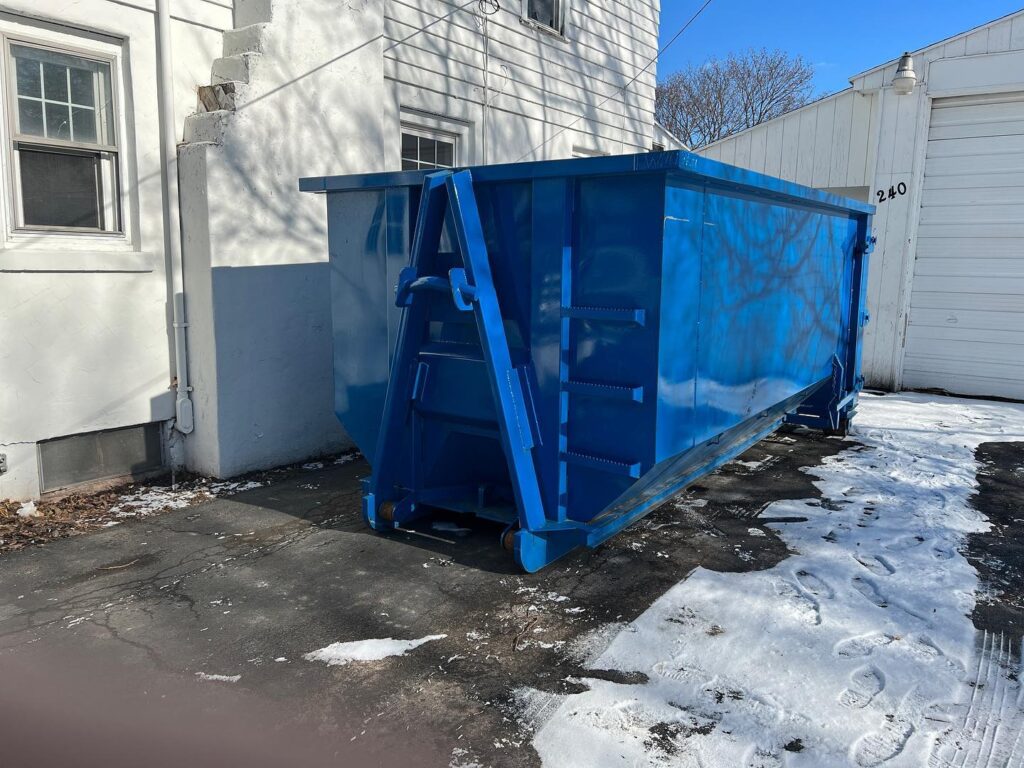
Dumpster Sizes Explained: The Complete Guide for Rochester Homeowners
You’ve got a project—a basement cleanout, a bathroom remodel, maybe tearing out that old deck. Now you’re staring at dumpster rental options wondering: what dumpster size do I actually need?
Order too small and you’re paying for a second haul. Order too big and you’re wasting money on capacity you won’t use. Neither feels great.
This guide breaks down exactly what each dumpster size holds, what projects they’re built for, and how to pick the right one the first time. We’ve helped Rochester homeowners and contractors make this decision hundreds of times—here’s everything we’ve learned.
Dumpster Size Quick Reference Chart
Before diving into details, here’s a quick overview of standard roll-off dumpster sizes:
| Size | Dimensions (L×W×H) | Capacity | Best For |
| 10 Yard | 12′ × 8′ × 3.5′ | 3-4 pickup loads | Small cleanouts, single-room projects |
| 15 Yard | 14′ × 8′ × 4′ | 5-6 pickup loads | Medium renovations, garage cleanouts |
| 20 Yard | 22′ × 8′ × 4.5′ | 7-8 pickup loads | Large renovations, roofing, multi-room |
| 30 Yard | 22′ × 8′ × 6′ | 10-12 pickup loads | Major construction, whole-house cleanouts |
The “yard” measurement refers to cubic yards of volume—the total space inside the container. A 20-yard dumpster holds 20 cubic yards of debris, roughly equivalent to 7-8 pickup truck loads.
10 Yard Dumpster: The Compact Option
A 10-yard dumpster is the smallest roll-off container commonly available. At roughly 12 feet long, 8 feet wide, and 3.5 feet tall, it’s compact enough to fit in most Rochester driveways—even the narrower ones common in Fairport, Pittsford, and the city’s older neighborhoods.
What Fits in a 10 Yard Dumpster
Think of a 10-yard container as holding approximately 3-4 pickup truck loads of debris. That’s enough for a single-room renovation, a small basement cleanout, or a moderate amount of yard waste. You could fit the contents of a typical one-car garage cleanout, a bathroom remodel’s worth of demo material, or roughly 1,500 square feet of removed flooring.
Best Projects for 10 Yard Dumpsters
- Small bathroom or kitchen demo
- Single-room carpet and flooring removal
- Moderate yard debris and brush
- One-car garage cleanout
- Small deck removal (under 200 sq ft)
When to Size Up
If your project involves multiple rooms, heavy materials like concrete, or you’re doing a whole-house cleanout, the 10-yard will fill up faster than you’d expect. Most homeowners underestimate debris volume—when in doubt, the 15-yard is often the smarter choice for just a modest price difference.
15 Yard Dumpster: The Versatile Middle Ground
The 15-yard dumpster hits a sweet spot for most residential projects. At approximately 14 feet long, 8 feet wide, and 4 feet tall, it provides significantly more capacity than a 10-yard while still fitting comfortably in standard driveways throughout Monroe County.
What Fits in a 15 Yard Dumpster
A 15-yard container holds roughly 5-6 pickup truck loads of material. That’s enough for a medium-sized renovation, a two-car garage cleanout, or a significant attic or basement purge. You could fit approximately 2,500 square feet of flooring, the debris from a medium kitchen remodel, or a typical Rochester basement’s accumulated decades of storage.
Best Projects for 15 Yard Dumpsters
- Medium kitchen or bathroom renovation
- Two-car garage cleanout
- Basement or attic cleanout
- Small deck demolition (200-400 sq ft)
- Estate cleanouts (single floor)
- Multiple-room flooring replacement
Why 15-Yard Is Often the Smart Choice
For most Rochester homeowners tackling weekend projects, the 15-yard provides enough buffer to handle the “I didn’t expect that” moments—the extra junk you find in the back of the garage, the water-damaged materials behind the drywall. The price difference from a 10-yard is typically modest, but the extra capacity can save you from an expensive second delivery.
20 Yard Dumpster: The Renovation Workhorse
The 20-yard dumpster is the most popular size for larger residential projects and smaller commercial jobs. At roughly 22 feet long, 8 feet wide, and 4.5 feet tall, it handles serious renovation debris while remaining manageable for residential driveways.
What Fits in a 20 Yard Dumpster
A 20-yard container holds approximately 7-8 pickup truck loads—enough for a major single-story renovation, large-scale cleanouts, or significant construction debris. That’s roughly 3,500 square feet of flooring, the demo material from gutting a kitchen and bathroom together, or the contents of a typical Rochester ranch home’s complete cleanout.
Best Projects for 20 Yard Dumpsters
- Large kitchen remodels with cabinet demo
- Roofing projects (up to 25 squares)
- Multi-room renovations
- Whole-house flooring replacement
- Large deck or shed demolition
- Full estate cleanouts
Weight Considerations
Here’s where Rochester projects get tricky: roofing debris. Asphalt shingles are deceptively heavy, and a typical roof tear-off can hit weight limits before the dumpster looks full. If you’re doing roofing work, discuss weight allowances with your rental provider upfront—you may need to spread material across the floor rather than pile it in one corner, or consider how the weight is distributed.
30 Yard Dumpster: Major Project Capacity
The 30-yard dumpster is built for major construction, large-scale demolition, and commercial projects. At approximately 22 feet long, 8 feet wide, and 6 feet tall, it’s the same footprint as a 20-yard but significantly taller.
What Fits in a 30 Yard Dumpster
A 30-yard container holds roughly 10-12 pickup truck loads—enough for major construction debris, complete gut renovations, or large commercial cleanouts. Think whole-floor renovations in a two-story home, significant demolition projects, or contractor jobs with substantial material removal.
Best Projects for 30 Yard Dumpsters
- New construction site debris
- Complete home gut renovations
- Large commercial cleanouts
- Major demolition projects
- Multiple-property cleanout projects
Placement Considerations
The 6-foot height on a 30-yard dumpster means you’ll need to throw debris over taller walls—fine for construction crews, but potentially challenging for homeowners doing DIY projects. The swing-open door on roll-off dumpsters helps, allowing you to walk materials in from ground level for the first portion of loading.
How to Choose the Right Size: A Practical Framework
Picking the right dumpster size comes down to three factors: the type of debris, the scope of your project, and whether you’d rather have too much capacity or not enough.
Step 1: Categorize Your Debris
Not all debris fills a dumpster equally. Bulky items like furniture and cabinets take up space fast but are relatively light. Dense materials like concrete, roofing shingles, and dirt hit weight limits before the dumpster looks full.
| Light/Bulky Debris | Mixed Debris | Heavy Debris |
| Furniture, mattresses | General construction | Concrete, brick |
| Cardboard, packaging | Mixed renovation debris | Asphalt shingles |
| Yard waste, brush | Drywall and framing | Dirt and soil |
| Household junk | Flooring materials | Tile and stone |
| Fill by volume | Watch both limits | Fill by weight |
Step 2: Estimate Your Project Scope
Use these rules of thumb based on common Rochester home sizes and project types:
| Project Type | Recommended Size |
| Single room cleanout | 10 yard |
| Bathroom remodel | 10-15 yard |
| Kitchen remodel | 15-20 yard |
| Garage cleanout (1-car) | 10 yard |
| Garage cleanout (2-car) | 15 yard |
| Basement cleanout | 15-20 yard |
| Deck removal (small) | 10-15 yard |
| Deck removal (large) | 20 yard |
| Roofing (up to 2,000 sq ft) | 20 yard |
| Whole-house cleanout | 20-30 yard |
| Major renovation/construction | 30 yard |
Step 3: When in Doubt, Size Up
Here’s the math most homeowners don’t consider: the price difference between a 15-yard and 20-yard dumpster is typically $50-100. The cost of a second dumpster delivery because you underestimated? That’s another full rental fee plus scheduling hassle. If you’re genuinely on the fence, the larger size almost always makes more financial sense.
Rochester-Specific Considerations
Dumpster selection in Western New York comes with some regional factors worth considering:
Driveway Placement in Older Neighborhoods
Many Rochester homes—particularly in the city, Irondequoit, and older sections of Brighton and Greece—have narrower driveways than newer suburban developments. A 10-yard or 15-yard dumpster typically fits these driveways comfortably. If you’re considering a 20-yard or larger, measure your driveway width (you need at least 10 feet for safe delivery) and length (at least 25 feet for a 20-yard).
Seasonal Project Timing
Spring and fall are peak seasons for dumpster rentals in the Rochester area—everyone’s tackling the same cleanouts and renovations. If your project is flexible, consider scheduling during slower periods for potentially faster delivery and better availability. Winter projects are absolutely possible (dumpsters can be delivered in snow), though ground conditions may affect placement options.
Permit Requirements
If your dumpster will sit on the street rather than your driveway, most Monroe County municipalities require a permit. Rochester, Brighton, Pittsford, Victor, and Fairport all have their own permit processes. When you can keep the dumpster on your own property, no permit is typically needed—but check with your local municipality if you’re unsure.
What Can and Can’t Go in a Dumpster
Roll-off dumpsters handle most household and construction debris, but certain items are prohibited due to safety and environmental regulations:
| ✓ Generally Accepted | ✗ Typically Prohibited |
| Furniture and mattresses | Hazardous materials |
| Appliances (most) | Paint, lacquers, adhesives |
| Construction debris | Refrigerators with freon |
| Roofing materials | Tires |
| Yard waste | Batteries (car or household) |
| Flooring materials | Electronics |
| Drywall and framing | Medical waste |
| General household items | Propane tanks, oil, fuel |
If you have items on the prohibited list, many can be handled separately through specialized disposal services. Ask your dumpster provider about options—they can often point you to appropriate resources.
Getting the Most From Your Dumpster Rental
Once you’ve selected the right size, proper loading technique can stretch your capacity significantly:
Use the door. Roll-off dumpsters have a swing-open door at one end. Open it, walk materials deep into the back, and fill those hard-to-reach corners first. Close the door and load over the sides once the back is full.
Break down materials. Flatten boxes, disassemble furniture, cut lumber to fit. A few minutes with a screwdriver or saw can dramatically increase usable capacity.
Load heavy items first. Place heavy materials flat on the dumpster floor, spread evenly rather than piled in corners. Stack lighter, bulkier items on top.
Don’t overfill. Keep debris at or below the top of the dumpster walls. Overfilled dumpsters can’t be safely transported and may incur additional fees.
Frequently Asked Questions
What’s the most popular dumpster size for homeowners?
The 15-yard dumpster is the most versatile for typical Rochester residential projects. It handles most cleanouts and medium renovations while fitting standard driveways.
How long can I keep a dumpster?
Standard rental periods vary by provider, typically ranging from 1-day rentals for quick cleanouts to 7-day rentals for renovation projects. Extensions are usually available if your project runs longer than expected.
Will a dumpster damage my driveway?
Quality dumpster providers use protective boards or heavy-duty underlayment beneath their containers to distribute weight and protect driveway surfaces. Ask about site protection when booking—it should be standard practice.
What happens if I exceed the weight limit?
Most dumpster rentals include a weight allowance (typically measured in tons). Exceeding this limit results in overage charges, usually calculated per additional ton. Heavy materials like concrete and roofing shingles are the most common culprits.
Can I put a dumpster on the street?
Yes, but you’ll likely need a permit from your local municipality. Most Rochester-area towns require street placement permits. If you can place the dumpster on your driveway or property, no permit is typically needed.
How do I know if a dumpster will fit in my driveway?
Measure your driveway width and available length. A 10-yard dumpster needs roughly 12 feet of length, while a 20-yard requires about 22 feet. Width should be at least 10 feet for safe delivery. Most providers can advise on placement during booking.
Not sure which size is right for your project? Our team has helped Rochester homeowners and contractors make this decision hundreds of times. Give us a call—we’ll walk you through your options and recommend the right size based on your specific project.